We are the boots on the ground
As the world population grows enormously, how can the people be taken cared of en-masse effectively? In response to the Institute of Medicine, nurses have been challenged to become an instrument to show leadership as they have the training and education to do so. Therefore, we are calling all nurses to respond and accept this challenge to take care of our people and communities in the capacity of Community and Public Health Nurses.
The Nurse is IN: “How may we help you?”
As nurses are given the challenge to lead individuals, families and communities toward health maintenance and promotion, we show our willingness to accept this responsibility by making ourselves available at your service.
The Nurse is IN program will make you feel the nurses’ presence and genuine interest in your health through socio-cultural and economic approaches to your well-being. It is our sincerest way to deliver our message of caring for communities, delivering public healthcare for all, resolving health disparities and promoting equality and equity for people of color and challenging the healthcare apartheid. The Nurse is IN is a sign of our presence in the community. How may we help you?
The Nurse is IN is one of our Nurse Driven Healthcare Solutions as a community and public health delivery system to ensure healthcare for all and ensure the first level of defense against diseases and illnesses and reduce healthcare cost and while ensuring quality healthcare and equity for all.
Three Tier Community and Public Health Delivery System
The Nursing Office. Com is a nurse‑led institution dedicated to advancing community and public health through education, advocacy, and creative leadership.
Rooted in two decades of service and storytelling, we bring together research, policy, and lived experience to illuminate the essential role of nursing in society.
This platform opens a new chapter in our work, a space where programs, publications, and multimedia features come together to support healthier individuals, stronger families, and empowered communities.
We welcome you to explore this evolving home of knowledge, collaboration, and public‑health innovation.
Building a Sustainable Public Health Workforce: Elevating Community Health Workers (CHWs)
A sustainable public health workforce requires a layered, culturally grounded, and community‑rooted structure. While nurses remain the clinical and organizational leaders of the Community and Public Health Delivery System, Community Health Workers (CHWs) serve as the essential frontline workforce, the “boots on the ground” who bring public health directly into homes, neighborhoods, and cultural communities. It begins with Gen Z and other emerging workers, and describes how CHWs can strengthen the healthcare ladder, relieve workforce shortages, and elevate nurses into advanced leadership roles.
The Historical Role of Community Health Workers
CHWs have existed for decades across the world under various titles:
- promotoras
- peer educators
- village health workers
- outreach workers
- lay health advisors
Despite their long history and proven effectiveness, CHWs have often been:
- underrecognized
- underfunded
- inconsistently integrated
- limited in career mobility
The Community and Public Health Delivery System seeks to change this trajectory by institutionalizing CHWs as a core workforce, supervised by nurses and embedded within community Hubs.
CHWs as the “Boots on the Ground” of Public Health
CHWs are uniquely positioned to serve as the frontline workforce because they:
- live in the communities they serve
- share cultural, linguistic, and social identities
- understand local needs and barriers
- build trust more rapidly than external professionals
- provide navigation, education, and support in real time
- bridge gaps between healthcare systems and community life
In this model, CHWs are not auxiliary—they are central to community health delivery.
The CHW–Nurse Leadership Model
The system uses a tiered workforce structure:
CHWs: Frontline Workforce
- conduct outreach
- support chronic disease management
- provide health education
- assist with navigation and referrals
- document community needs
- support cultural and ceremonial activities
Nurses: Supervisors, Educators, and Leaders
Nurses provide:
- clinical oversight
- training and mentorship
- program coordination
- evaluation and quality assurance
- leadership in policy and system design
Advanced Practice Nurses: System Architects
Nurses with advanced degrees (MSN, DNP, PhD) serve as:
- program directors
- community health strategists
- policy advocates
- institutional leaders
- “the next doctors in the house” in rural and underserved areas
This structure elevates nurses while expanding the workforce beneath them.
CHWs as an Entry Point for Gen Z and Emerging Workers
Gen Z is entering the workforce with:
- a desire for meaningful work
- interest in health, wellness, and social impact
- comfort with technology and digital tools
- openness to hybrid and flexible work models
- a strong sense of justice and community
The CHW role is an ideal entry point for this generation.
Low Barrier, High Impact
For individuals with college degrees, CHW certification requires:
- short‑term training
- competency‑based learning
- cultural and community engagement skills
This creates rapid employment pathways.
Career Mobility
CHW roles can lead to:
nursing (LPN, RN, BSN)
- public health degrees
- social work
- health education
- community leadership
The CHW role becomes the first rung of the healthcare ladder.
Addressing Workforce Shortages Through the CHW Pipeline
1 Nursing Shortage
By attracting Gen Z into CHW roles:
- more young workers enter the healthcare pipeline
- CHWs gain exposure to nursing practice
- many transition into nursing programs
- nurses can delegate tasks and focus on leadership
This relieves pressure on the nursing workforce.
2 Physician Shortage
Especially in rural areas:
• advanced practice nurses (NPs, DNPs) can fill clinical gaps
• CHWs support navigation, follow‑up, and chronic disease management
• the CHW–nurse team becomes a community‑based primary care extension
This strengthens rural health systems.
3 Public Health Workforce Shortage
CHWs expand capacity by:
- supporting community assessments
- conducting outreach
- facilitating programs
- documenting needs and outcomes
This builds a sustainable, community‑rooted workforce.
CHW Competencies in the Community and Public Health Delivery System
CHWs in this model are trained in:
1 Core Competencies
- communication and cultural humility
- health education and literacy
- chronic disease support
- navigation and referral
- documentation and evaluation
- digital literacy and telehealth support
2 Community‑Specific Competencies
- cultural and ceremonial integration
- community mapping
- outreach strategies
- intergenerational engagement
3 System‑Level Competencies
- partnership coordination
- program implementation
- data collection for evaluation
- participation in quality improvement
These competencies align CHWs with the system’s architecture.
Training and Certification Pathways
1 Certification Programs
CHW certification can be delivered through:
- community colleges
- public health departments
- workforce development programs
- online and hybrid platforms
2 Nurse‑Led Training
Nurses supervise:
- clinical content
- chronic disease modules
- communication and ethics
- documentation and evaluation
3 Cultural and Community Training
Community leaders provide:
- cultural knowledge
- ceremonial practices
- local history and context
This creates a holistic, community‑rooted training model.
Integrating CHWs into the Community Hub
CHWs serve as:
- outreach coordinators
- program facilitators
- navigators and connectors
- cultural ambassadors
- documentation stewards
Their presence strengthens:
- trust
- participation
- cultural relevance
- continuity of care
CHWs become the heartbeat of the Hub.
Policy and Funding Implications
Scaling the CHW workforce requires:
- Medicaid reimbursement for CHW services
- state certification standards
- workforce development funding
- partnerships with educational institutions
- integration into public health modernization plans
Policy alignment ensures sustainability.
The Ripple Effect: A New Workforce Ecosystem
When CHWs are elevated:
- Gen Z enters healthcare
- nursing shortages decrease
- nurses move into leadership
- advanced practice nurses fill clinical gaps
- rural communities gain access to care
- public health infrastructure strengthens
- cultural relevance increases
- community trust deepens
This creates a self‑sustaining workforce ecosystem.
Summary
Building a sustainable public health workforce requires a layered, culturally grounded model that elevates CHWs as the frontline workforce under the leadership of nurses. By positioning CHWs as the “boots on the ground,” creating rapid pathways for Gen Z and emerging workers, and strengthening the healthcare ladder, the system addresses workforce shortages while expanding community capacity. This chapter establishes CHWs as essential to the future of public health and positions nurses as the leaders who guide, supervise, and shape the next generation of healthcare professionals.
Community Concierge
Welcome to Your New Community Concierge
The Modern Community Center — Nurse-Led, Always Open, Rooted in You.
Yesterday’s Community Center. Today’s Community Concierge.
Remember when the local community center was the heart of the neighborhood? A warm, trusted place to find support, ask questions, and connect with people who cared?
The Nursing Office Public Health System is bringing that legacy into the modern era. We are proud to introduce The Community Concierge—your neighborhood’s updated, 24/7/365 public health sanctuary.
What Is Your Community Concierge?
Think of us as your personal health navigator and neighborhood anchor rolled into one. You don't need an appointment, a referral, or complicated paperwork. Whether you need help understanding a doctor’s discharge plan at 2:00 AM or want to learn simple ways to keep your family healthy, our nurses and community advocates are right here in your corner.
- Open 24/7/365: Public health doesn't take nights or weekends off, and neither do we.
- Nurse-Led & Human-Centered: Compassionate, professional guidance translated into plain language.
- Hybrid Access: Visit us in person at our neighborhood sanctuary hub or reach us instantly through our virtual digital switchboard.
How Your Community Concierge Serves You
Care Navigation
- Hospital discharge support
- Specialist Referrals
- Insurance Navigation
Self-Preservation
- Wellness screenings
- Health literacy classes
- Nutrition & lifestyle workshops
24/7 After-Hours Safety
- Real-time triage line
- Instant nurse-led guidance
- ER visit prevention
Health For the People, By the People
Healthcare has gotten too complicated, cold, and fragmented. The Nursing Office is putting health back where it belongs: directly in the places where you live, work, and move.
Stop by or Connect Today
- Visit Our Physical Hub: Your neighborhood sanctuary for wellness, guidance, and peace of mind.
- Connect Virtually Anytime: Scan the QR code or call our 24/7 Community Line for instant nurse-led support.
The Nursing Office Public Health System
Keeping our community safe, connected, and cared for—every hour, every day.
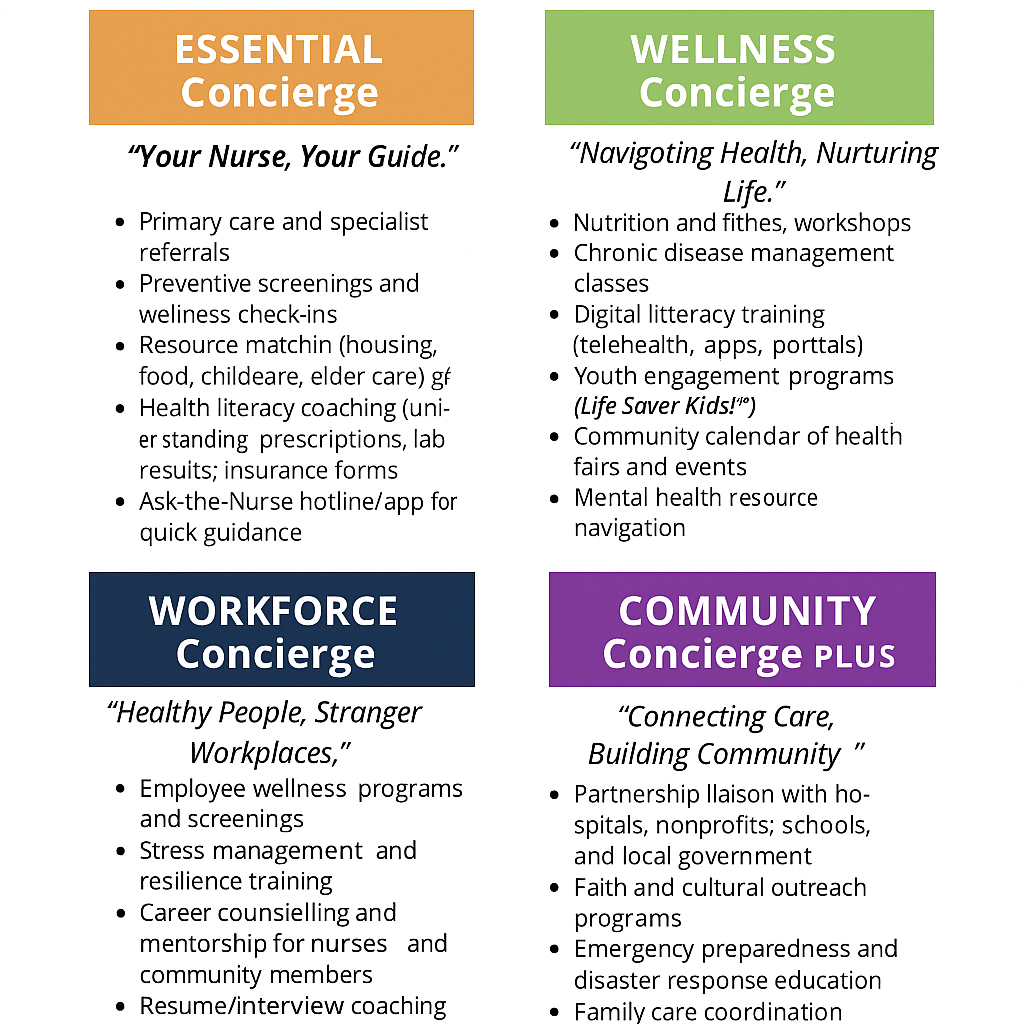

Essential Concierge
“Your Nurse, Your Guide”
- Primary Care and Specialist Referrals
- Preventive Screenings and Wellness Check-Ins
- Resource Matching (Housing, Food, Childcare, Eldercare)
- Health Literacy Coaching (Understanding prescriptions, lab results, insurance forms)
- Ask-the-Nurse Hotline/App for quick guide
- Health City 365

Wellness Concierge
“Navigating Health, Nurturing Life”
- Nutrition and Fitness Workshops
- Chronic Disease Management Workshops/Classes
- Digital Literacy Training (Telehealth, Apps, Portals”)
- Youth Engagement Programs (Life Saver Kids)
- Community Calendar of Health Fairs and Events
- Mental Health Resource Navigation
- Public Health Dashboard

Workforce Concierge
“Healthy People, Stronger Workplaces”
- Employee Wellness Programs and Screenings
- Stress Management and Resilience Training
- Career Counselling and Mentorships for Nurses and Community Members
- Resume/Interview Coaching and non-profit pathways
- Community Health Workers Essentials
- HR Consulting for small clinics and non-profits
- Diversity, Equity and Inclusion workshops
- The Nursing Annex Online School

Community Concierge Plus
“Connecting Care, Building Community”
- Partnership Liaison with hospitals, non-profits, schools and local government
- Faith and Cultural Outreach Program
- Emergency Preparedness and Disaster Response Education
- Family Care Coordination across generations
- Legacy archiving of community health stories
- Volunteer and peer support networks
Teaching is our Way of Giving
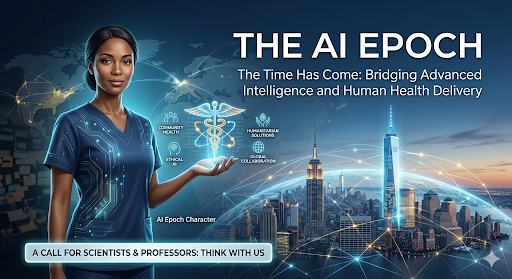
Public Health Dashboard
The Story of Public Health
Address
88-16 187 Street, Hollis, New York, 11423
Contact
Myrna D. Santos, MSN, PHN, RN
myrnyc@msn.com
ALWAYS OPEN
24/7